Never ask for the source again.
Embedded provenance at creation.
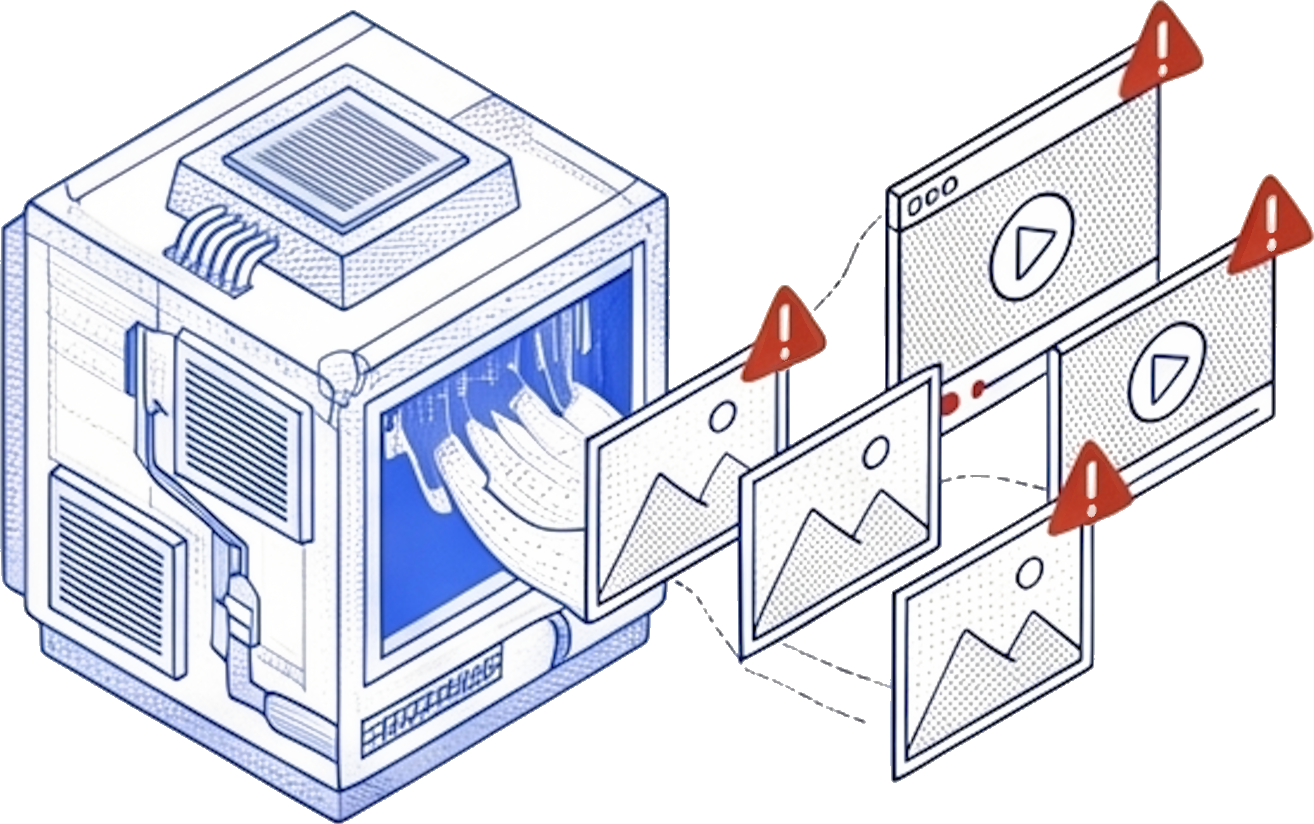
Artefacts can spread lies.
Visuals carry the message
Across schoolbooks, news, science, and public communication, a decisive shift from the verbal to the visual has been underway for thirty years. Images, figures, screenshots, and short video are no longer decoration around text: they carry the essence of the claim, cross language barriers, and propagate faster than words.
Now anyone can fabricate one
produces realistic artefacts in seconds, at near-zero cost. The number of synthetic artefacts has grown roughly fifteenfold in two years and is already weaponised for fraud, political manipulation, and fabricated evidence.
Real images, false meaning
Most online misinformation isn't a fabrication, it's a genuine artefact stripped from its source and recaptioned. Experimental work shows that disinformation paired with images is more persuasive and harder to rebut than text alone.
Generation is easy.
Verification is hard.
states that the amount of energy needed to refute a falsehood is an order of magnitude bigger than that needed to produce it. Modern technologies like generative AI has amplified this asymmetry. Fabricating a convincing artefact now costs cents and takes seconds. Verifying one still demands days of forensic analysis and institutional expertise.
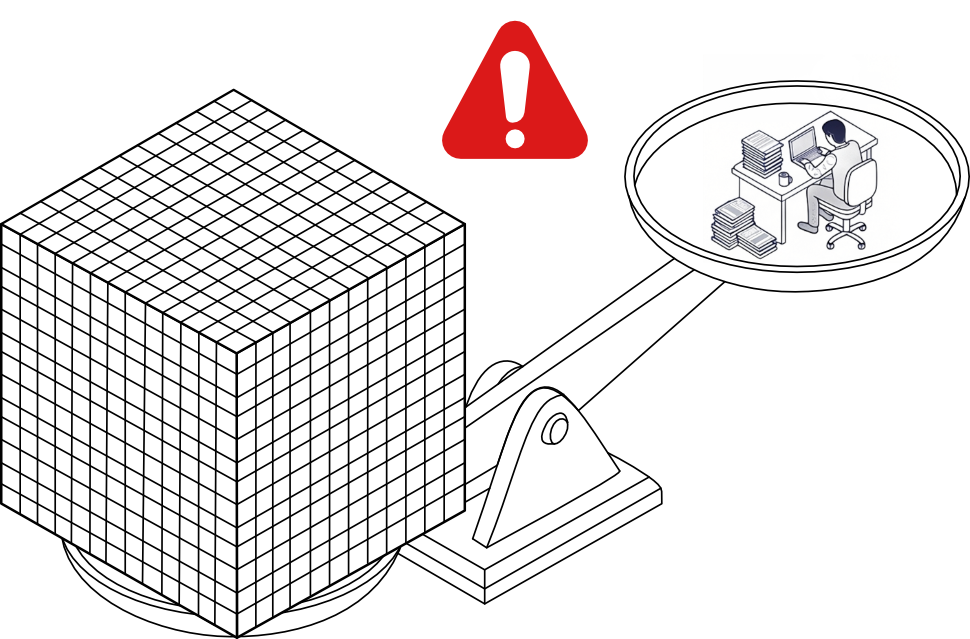
Content moderation cannot solve this. Manual fact-checking is a human-paced response to a machine-paced threat. The only sustainable answer is symmetric: when generation is automated, verification has to be automated too. Provenance must be attached to the artefact at the source, travelling with the artefact, permanently checkable by machine and human.
“When content generation is automated, content verification has to be automated too.”
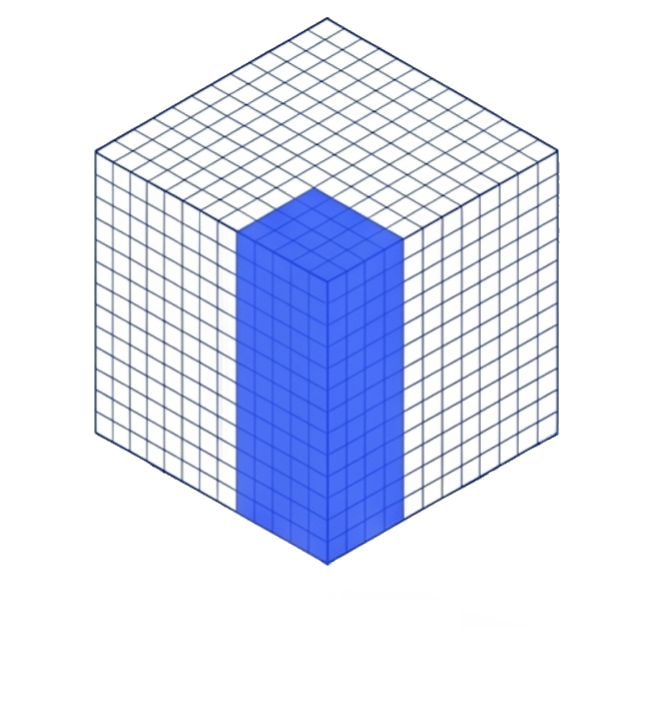
 ▂▅▃▇▅█ 0x4f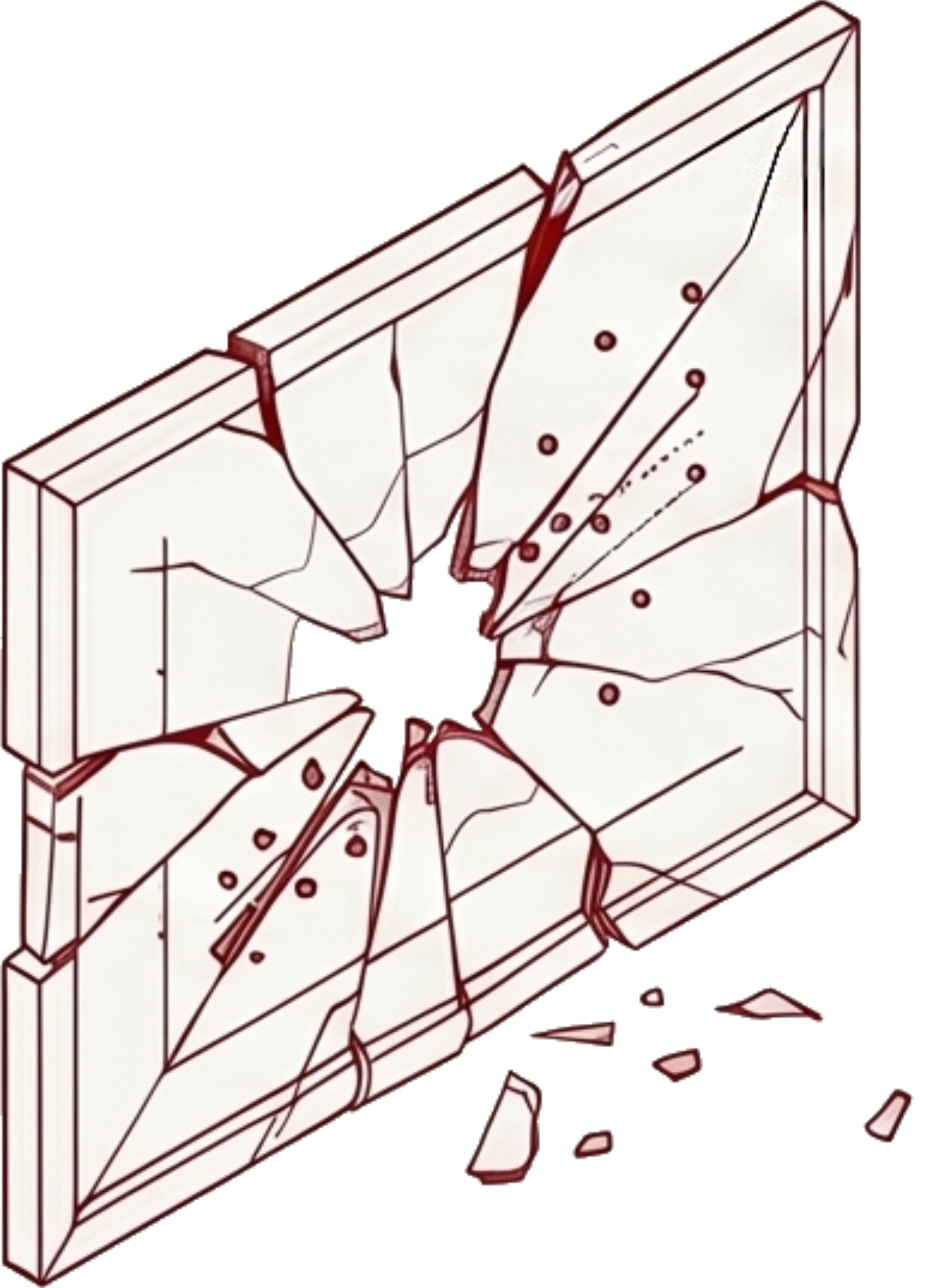
Science is at risk
Science is the upstream source of public truth. Scientific findings go on to shape clinical decisions, regulatory filings, policy debates, and textbooks. When research can't be reproduced, traced, or distinguished from a fabrication, the contamination travels downstream into everything that cites it.
of researchers in a Nature survey of 1,576 had failed to reproduce another scientist's results; over 50% had failed to reproduce their own. In life-science, that record is overwhelmingly carried by figures.
of 20,000+ biomedical publications (up to 12% in some journals) contained inappropriately duplicated figures: a peer-reviewed prevalence baseline that predates AI.
Suspected paper-mill manuscripts received by some journal editors every month, increasingly accompanied by text-to-image figures (e.g. fake western blots) indistinguishable from real data.
The cost of unverified artefacts.
Without a provenance layer, every artefact is a potential vector for fraud, manipulation, and irreproducible research. The bill (financial, social, and scientific) is already being paid.
Projected US generative-AI fraud losses (Deloitte). Deepfake content volumes have grown roughly fifteenfold in two years.
Wired across fifteen transfers by a single Arup employee in January 2024, deceived by an AI-generated CFO and colleagues built from publicly available footage.
Estimated annual US spend on preclinical research that cannot be reproduced: a structural cost of unverifiable scientific artefacts.
Average direct cost of a single retracted NIH-funded paper; total institutional impact often reaches several million dollars per retraction.
Average annual cost to a single organisation of poor and fragmented data quality with artefacts scattered across notebooks, drives, email, and chat, with no shared lineage between them.
Provenance is becoming standard.
| Framework | Scope | Enforcement | Status |
|---|---|---|---|
| EU AI Act Article 50 | Machine-readable marking of AI-generated content. | Aug 2026 | approaching [ SOURCE ]Regulation (EU) 2024/1689 · Aug 2026 · EU AI Act, Article 50 — marking and labelling of AI-generated content
↗
|
| ERA Act & Horizon Europe | Findable, Accessible, Interoperable, Reusable data management required for EU research funding. | Ongoing | live [ SOURCE ]Scientific Data (Wilkinson et al.) · 2016 · The FAIR Guiding Principles for scientific data management and stewardship
↗
|
| · GxP EMA · ICH | Attributable, Legible, Contemporaneous, Original, Accurate plus Complete, Consistent, Enduring, Available. Data integrity for regulated submissions. | Ongoing | live [ SOURCE ]EMA · 2023 · Guideline on computerised systems and electronic data in clinical trials (ALCOA+ data-integrity principles)
↗
|
| C2PA ISO/IEC 22144 | Open standard for cryptographically signed content provenance with assertions, claims, and manifests bound to media. Backed by Adobe, Google, Microsoft, OpenAI, Meta & Amazon. | Published 2025 | live [ SOURCE ]ISO/IEC · 2025 · ISO/IEC 22144 — Information technology · Content provenance and authenticity (C2PA standardisation)
↗
|
| SynthID cross-industry | Invisible watermarking and detection for AI-generated images, audio, text, and video. Now adopted beyond Google, OpenAI, ElevenLabs & Nvidia embed it alongside C2PA Content Credentials. | Since 2023 | live [ SOURCE ]Google DeepMind · 2023 · SynthID — watermarking and identifying AI-generated images, audio, text, and video
↗
[ SOURCE ]OpenAI · May 2026 · Advancing content provenance — joining the C2PA steering committee and embedding SynthID alongside Content Credentials
↗
|
| Deep Synthesis Provisions CAC · China | Mandatory labelling of AI-generated and deep-synthesis content; provider liability for unlabelled output. | Jan 2023 | live [ SOURCE ]Cyberspace Administration of China · Jan 2023 · Provisions on the Administration of Deep Synthesis Internet Information Services — mandatory labelling of AI-generated and deep-synthesis content
↗
|
Build on what actually happened.
Provenance is no longer an option.
inquiries · [ email ]
[ AFTERFACT SASU · PARIS · MAY 2026 ]